Tuesday, February 24, 2009

It's just a simple Product Photograph!

art_deco_lamp.jpg

Well, yes... and no!

A product photograph, from our little photo studio, just outside of Boston, is almost always a combination of collaborative thinking, careful interviewing and preplanning.

This beautiful, art deco style lamp would look good on almost any background. However, looking around the show room during our initial conversation with the client, we quickly decided that the image needed to carefully reflect an old world warmth and quality.

Back at the studio, we pulled out a canvas background we had created a while back. It consisted of an application of a material called Instant Rust. I had remembered that the application had turned out with a nice, painterly quality that reminded me of the old masters' paintings of bowls of fruit and other still life compositions.

The lamp itself, with its round top, projected a warm glow that we needed to imitate in the shot. Also, with all that chrome, we needed to figure out how to create smooth, uninterrupted highlights.

The set was built in a small room, with the 4'x8' canvas swept out across the floor. A strobe head with a grid and warming gel was targeted on the background and adjusted so that the light looked like it was coming from the lamp. A second strobe, shot through a 3'x6' sheet, became our main light to the right of the camera. And, a large white card was added on the left to give us the highlight on the left side of the shaft. Some time was spent balancing the exposure for the incandescent bulb in the lamp and the strobes.

There was a conversation about the light switch. Do we show it or not? Since it was, ultimately, part of the design and usability of the product, we included it.

Tuesday, February 17, 2009

There are no Accidents in Product Photography

food illustration photography by a Boston Photographer


Actually, according to your audience, there are no accidents in any of your photographs. Whatever they see in the picture is what they think that you meant to be in the picture.

You could tell them that something was a lucky accident or that it was a mistake and they shouldn't look in the corner or something.

However, most of the time, photos get seen without the creator there to explain them. They live and die without us. Often, without us even knowing.

This shot of a wonderfully plated piece of salmon was created by a chef in a conference center in Atlanta. We were brought down to photograph the property and part of the project was to promote the restaurant.

We scouted the location earlier in the day and found a spot that had controllable lighting and was out of the way enough so that we wouldn't interfere with the service. We also had a frank discussion about what would be in the shot, which way the plate needed to face and what, exactly, would be important and what would be secondary to the story we were creating.

At shoot time, we set up on a "stunt" plate. It was initially, a plate with a balled up napkin on it, so we could set up our lighting. As a result of prescouting the location, I knew that I would use my own lights and turn off the room lights. Using a combination of strobes and hotlights, the shot quickly evolved and the Chef brought out the final plated entree.

A quick brush with some olive oil, a tweak of the garnish and we captured the image.

And, everything in the frame, from the bacon to the wine bottle, is exactly where we meant it to be.

Monday, February 09, 2009

Digital Illustration in Product Photography

Product Illustration by Matt McKee Photography


Pre planning a product photograph is the best way to get the maximum impact for your buck.

Many of the conversations I have with potential clients start out with them calling me up and asking, "How much?"

And, I always feel a little bad when I have to ask "For what?"

I am not being a wise guy. I am not making fun of them. I am simply trying to identify what their goal is for the product shot.

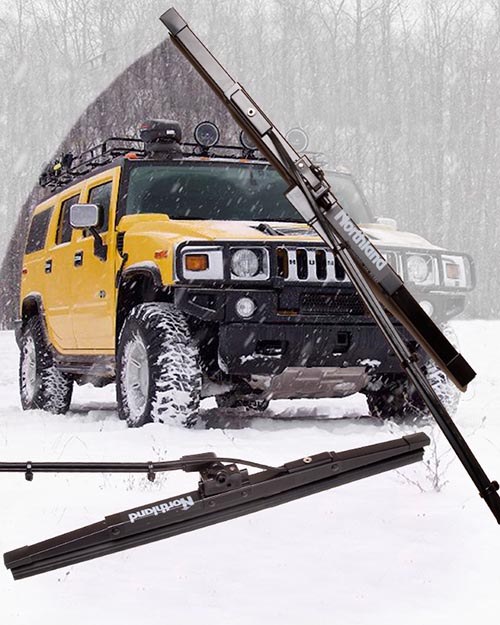
For example, the digital illustration above was created to be used with a press release that would go out to all of the automotive trade magazines. Our goal, therefore, was to create an image that would appeal to the magazine editors.

It had to:
  • be more than a simple documentary photo of the product on white.

  • illustrate what the product looks like.

  • illustrate what problem the product solves.

  • be shown in a way that the target audience would understand.


  • The shot would also be used for their catalog and other sales collateral. But, since the editorial use came first, that was what we designed and optimized the photograph for.

    We started with a "napkin" plan, a sketch of the elements of the shot jotted down on a piece of paper. This was our blueprints for the rest of the production. Without this step, we could have spent hours or even days, going back and forth, trying to come to a meeting of the minds, wasting time and money.

    Instead, we knew what angle the client liked best angle, we knew where the "sweep" should be. And, we knew what kind of a stock shot in the background would appeal to our target audience.

    The setup, in my small photo studio, just outside of Boston, was fairly simple. We only had one wiper, since this was a prototype. We shot it twice, using a nice broad light to give us smooth highlights. In post production, we set up the stock background and knocked out the background on the two wiper shots.

    The whole shoot and post production was around three hours. But, we couldn't have done it that quickly, or efficiently, if we hadn't started with a plan.

    Friday, February 06, 2009

    Boston Product Photography Blog restart

    fireman_mckeephoto.jpg


    Okay, so I really haven't been slacking here, despite what you may think. My studio is a multifaceted beast that takes on all kinds of photography and photo illustration projects. For the last however many months, I have been redeveloping the mckeephotography.com site to more fully reflect one particular side of my commercial photography.

    And, while we were at it, we started another blog at blog.mckeephotography.com to show off some of our more digitally manipulated and conceptual images, many of which are also available as stock photos from photoshelter.

    So, why are we resurrecting the blogspot photography blog? One thing we do a lot of here in my little photo studio in Dedham, is capture the functionality of a product.

    I like to think of it as table top photography that is designed to illustrate the soul of an engineer's or entrepreneur's design. The product shot needs to show the audience why the widget was thought up and what problem it solves.

    Not always an easy task and even the simplest looking photo goes through a lot of thought and back and forth before we start setting up.

    Stay tuned, gentle readers, and we will talk about product photography in the future posts!

    sponsor