Showing posts with label industrial photography. Show all posts

Wednesday, April 29, 2009

Anatomy of a Product Photo Shoot - Part A - Begin at the End.

productshotA.jpg
I believe that a photoshoot, whether for a product illustration, corporate portrait, or annual report cover, starts with the vision of the final image. Begin at the end, as it were. Ansel Adams called it "previsualization" and it is what makes the difference between a great image and hours of fumbling around in a dark studio.

The first thing I ask my clients, when they come to me with a shoot idea is, "where is the picture going to be used?" Almost always, they have a specific plan as to why they want this image. It could be a brochure or sell sheet, web page or direct mail card. Or a combination of many uses.

How they plan to use it is very important to how we create the image. If the image is solely going to be used in a product catalog, then the image needs to be designed so that it can share attention on a page with other products.

However, if it is for a press release or publicity release about the product or company, or if it is for an ad or trade show sell sheet, then the final photo illustration has to practically jump off the page to get a potential buyer's attention.

The plan and rational for each decision about why we are making the image directly impacts how we produce the image.

More about the Anatomy of Product Photography next time!

Monday, March 09, 2009

I love the photograph but what do I do with it?

motorcycle1_mckeephoto.jpg
I get this question sometimes, when I am talking about my photography to owners of companies who are, understandably, more concerned about making payroll than discussing where art and commerce intersect (that's marketing at its finest, folks!). I also get it from graphic designers who are used to responding to orders from their clients.

Yes, I get that not every photograph has to be a museum piece. Sometimes, a product is just a product. But, shouldn't the photoshoot be the best value that you can get?

I don't mean "spend as much as you can." That would be silly, self serving, and, ultimately, deadly for my business.

The value, as any entrepeneur can tell you, is not just in the final object (photo, product, whatever). It is in the process, in the plan, and in the execution.

Many times, the story I have been told runs like this: "We did it ourselves. Twice. And, it was okay but...[retouching fees, didn't look quite like x...] "

Or: "We found this picture online. It was short money. We put it on the cover of our brochure. [So did our competition, it was too generic, it wasn't our product/people/service]."

Even worse: "We downloaded this picture from someone's photo sharing site. And, now we have a cease and desist letter, plus a court date."

So, you love the portfolio, but it isn't quite your product type/looks real artsy/looks expensive. That's okay.

What you do with it is use it as a conversation starter. Find a photo that is nice and ask the photographer the key question: "If you were going to photograph my product, how would you approach it?"

If the photographer asks about the goal of the photograph, the value of the image to you, your company and your potential customers, you have someone who will collaborate with you and work the intersection of art and commerce to your advantage!

--

The picture of the custom built motorcycle above was created in an iron fabrication company down in Rhode Island a few years ago. We used a combination of light sources to get the nice highlights, including a 12' by 12' silk on two high boy stands on the camera left. On camera right was the biggest softbox I had in my collection. Various white and silver cards were distributed around to keep the highlights clean. A smoke machine gave us the atmosphere in the background and the light streaming in through the windows was courtesy of Mother Nature.
Tuesday, February 24, 2009

It's just a simple Product Photograph!

art_deco_lamp.jpg

Well, yes... and no!

A product photograph, from our little photo studio, just outside of Boston, is almost always a combination of collaborative thinking, careful interviewing and preplanning.

This beautiful, art deco style lamp would look good on almost any background. However, looking around the show room during our initial conversation with the client, we quickly decided that the image needed to carefully reflect an old world warmth and quality.

Back at the studio, we pulled out a canvas background we had created a while back. It consisted of an application of a material called Instant Rust. I had remembered that the application had turned out with a nice, painterly quality that reminded me of the old masters' paintings of bowls of fruit and other still life compositions.

The lamp itself, with its round top, projected a warm glow that we needed to imitate in the shot. Also, with all that chrome, we needed to figure out how to create smooth, uninterrupted highlights.

The set was built in a small room, with the 4'x8' canvas swept out across the floor. A strobe head with a grid and warming gel was targeted on the background and adjusted so that the light looked like it was coming from the lamp. A second strobe, shot through a 3'x6' sheet, became our main light to the right of the camera. And, a large white card was added on the left to give us the highlight on the left side of the shaft. Some time was spent balancing the exposure for the incandescent bulb in the lamp and the strobes.

There was a conversation about the light switch. Do we show it or not? Since it was, ultimately, part of the design and usability of the product, we included it.

Friday, February 06, 2009

Boston Product Photography Blog restart

fireman_mckeephoto.jpg


Okay, so I really haven't been slacking here, despite what you may think. My studio is a multifaceted beast that takes on all kinds of photography and photo illustration projects. For the last however many months, I have been redeveloping the mckeephotography.com site to more fully reflect one particular side of my commercial photography.

And, while we were at it, we started another blog at blog.mckeephotography.com to show off some of our more digitally manipulated and conceptual images, many of which are also available as stock photos from photoshelter.

So, why are we resurrecting the blogspot photography blog? One thing we do a lot of here in my little photo studio in Dedham, is capture the functionality of a product.

I like to think of it as table top photography that is designed to illustrate the soul of an engineer's or entrepreneur's design. The product shot needs to show the audience why the widget was thought up and what problem it solves.

Not always an easy task and even the simplest looking photo goes through a lot of thought and back and forth before we start setting up.

Stay tuned, gentle readers, and we will talk about product photography in the future posts!

Monday, September 08, 2008

High tech toys

mckee_080403_0150.jpg


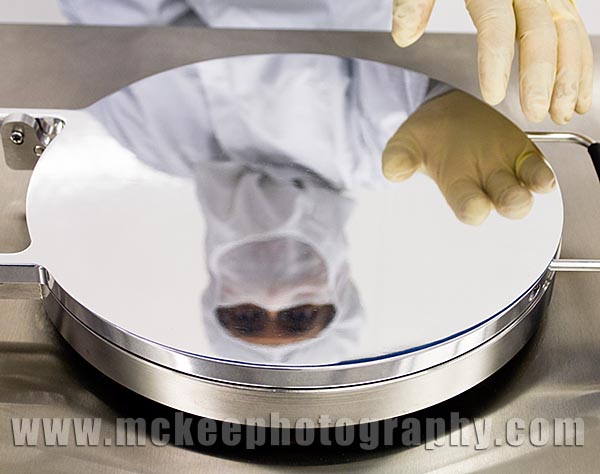
High tech labs are always interesting to walk into. This one was for Cambridge Nanotech. They are developing ADL technologies for other industries. What, exactly, this means, I am not too sure. (Hey, I said they were cool. I didn't say I knew what the machines were doing! ;-))

However, the machines are shiny and the clients are proud of their accomplishments. Between the marketing director and myself, we came up with a set of images that will help to convey this pride and passion for their products.

Thursday, July 31, 2008

An EMC Server

mckee_070619_411b.jpg
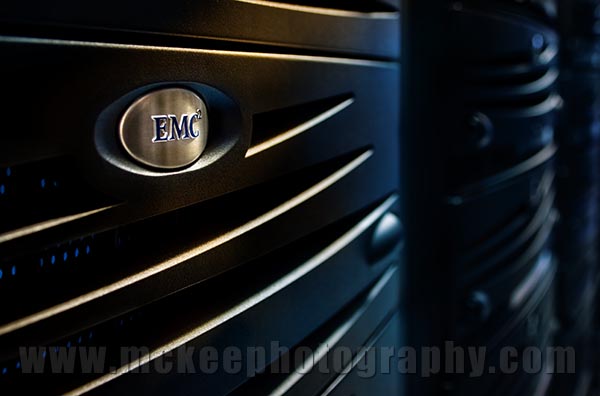
There is something about a server room. Row after row of large masses of data. Lights blinking. Wires streaming.

I always want to talk in a hushed tone around these objects, as if I would interrupt some critical calculation by asking where the light switch was.

Of course, you can't whisper, or even talk softly, because of the cooling fans, air conditioning units and occasional tech engineer trying to figure out why the marketing director wants to show him working on the new unit instead of the older one that needs to be repaired.

Monday, April 14, 2008

Industrial Lighting and Adapting Photography

mckee_080213_0286B.jpg

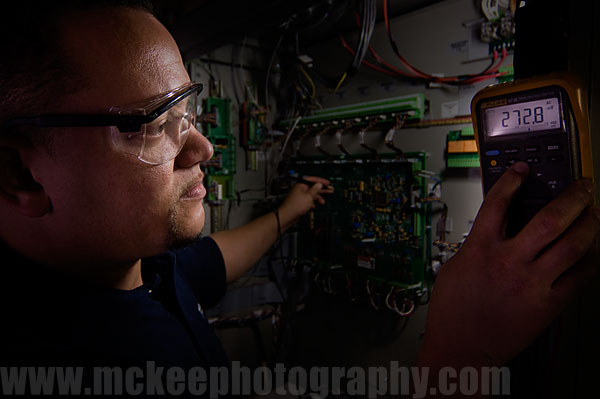
So, there we were, in a dark room, with a gazillion volts of electricity stored in huge banks of batteries. High voltage signage everywhere. A deep hum, charged with menace, replaces the whir of ventilation fans from the data center we were just shooting in.

We went from brilliant flat lighting to almost no lighting at all. And, the concept called for shooting into a dark cabinet, while the technician does... well, whatever they do in there. (When I asked him, he said, "Mostly, we try not to get zapped!")

I looked up and saw three different tubes of flourescent lighting, two tungsten cans and something that may have been a mercury vapor.

I looked at my assistant, who shrugged back at me, and I said, "Get the secret weapon!"

Under the technician's careful supervision, we tucked it back in the cabinet and plugged it in. Added a couple of gelled lights and reflectors around the outside and started shooting.

So, what is the secret weapon? An LED worklight from the hardware store.

Perfect for those hard to reach, tucked in spaces, to add dimensionality to any photoshoot!

sponsor